


How to Choose Spermidine Supplement: 7 Criteria That Matter
Updated on Jun 15, 2026

Table of contents
- Criterion 1: Dose Per Serving
- Criterion 2: Source & Form of Spermidine
- Criterion 3: Third-Party Testing (COAs)
- Criterion 4: Additional Ingredients
- Criterion 5: Absorption & Bioavailability
- Criterion 6: Price Per Serving
- Criterion 7: Company Reputation
- Our Top Picks Based on These Criteria
- Checklist: Questions to Ask Before Buying
Spermidine is a naturally occurring polyamine found in all living cells. It has attracted serious scientific attention as a longevity compound, with a plausible mechanism in autophagy induction supported by strong preclinical data and promising epidemiological associations with reduced cardiovascular and all-cause mortality. Human clinical evidence, however, is considerably more limited and more mixed than most supplement marketing implies.
This guide prioritizes evidence first, honest assessments of what the research does and does not support, and practical criteria to distinguish quality products from noise. The spermidine evidence base is still at an earlier stage, and some of the most cited human trials have returned null or inconclusive results.
We think that context matters before you spend money on any supplement in this category.
Key Takeaways:
- Spermidine research shows promising preclinical but limited mixed human evidence; mortality associations not confirmed clinically.
- Clinical trials 0.9 to 40 mg show safety but no consistent increase in circulating spermidine or clear biomarker effects.
- Product quality depends on form wheat germ extract or spermidine 3HCl and verified COAs with standardized mg disclosure.
- Top evaluated products include OMRE, SpermidineLIFE, Oxford Healthspan Primeadine, Double Wood, Toniiq, Neurogan with varying transparency and dosing.
- Best purchasing criteria prioritize lot specific COA, GMP certification, clear mg labeling, no proprietary blends, and realistic claims.
Criterion 1: Dose Per Serving
Dose is the most contested and least settled variable in the spermidine supplement space — and honest guidance here requires being blunt about what the research shows.
Most commercial supplements provide between 1–15mg of spermidine per day, typically delivered via wheat germ extract. However, the human RCT with the largest sample and longest duration — SmartAge — used only 0.9mg/day and found no significant effect on its primary endpoints (1). The researchers themselves noted the dose may have been insufficient.
A 2023 pharmacokinetic RCT tested 15mg/day in 12 healthy volunteers and found it did not detectably raise plasma spermidine concentrations, suggesting robust homeostatic control of circulating polyamines regardless of supplemental intake (2). A 2024 safety trial tested 40mg/day of high-purity spermidine trihydrochloride for up to 28 days and confirmed safety but also found no significant changes in circulating polyamine levels (3).
Always verify the label claim against the Certificate of Analysis (see Criterion 3). Some products are underdosed by as much as 50-80%.
Dose reference (working hypothesis, not clinically confirmed):
-
Under 1mg/day — Reflects the SmartAge trial dose; that trial found no significant biomarker effect.
-
1–6mg/day — Common commercial range; plausible but not proven at a pharmacokinetic level.
-
6–15mg/day — Upper range of most commercial products; 15mg/day did not raise plasma levels in one RCT.
-
40mg/day (trihydrochloride form) — Confirmed safe in one trial; still no detected polyamine elevation.
Criterion 2: Source & Form of Spermidine
Not all spermidine supplements are created equal. The compound is available in two primary forms, and the distinction matters for both clinical relevance and purity. Most human research to date has used plant-derived sources, while newer products increasingly use synthetic isolates.
What to look for:
Spermidine should be clearly labeled as either wheat germ extract (standardized for spermidine) or spermidine trihydrochloride (3HCl). Unspecified “spermidine” without form disclosure is a red flag.
Label red flags:
-
No form specified (just “spermidine”).
-
Wheat germ extract without standardized spermidine content in mg.
-
Listing only extracts weight without an active compound amount.
-
3HCl form without stated purity or COA verification.
Stability note:
High-quality spermidine products should be stored in airtight, moisture-protected containers. While more stable than NMN, protection from humidity and oxidation still supports shelf life and potency.
Criterion 3: Third-Party Testing (COAs)
Third-party testing is one of the most important quality signals for any supplement, and it is especially critical for spermidine. Unlike many compounds, spermidine is present in very small quantities (milligrams rather than grams), which makes accurate measurement more technically challenging and increases the risk of mislabeling.
What a good COA shows:
-
Identity confirmed as spermidine (ideally with method specified: HPLC or LC-MS/MS).
-
Spermidine content per serving verified against label claim.
-
Heavy metals below USP limits.
-
Microbial counts within acceptable range.
-
For wheat germ extract: gluten content quantified.
-
For 3HCl: purity percentage confirmed, at minimum 98%.
-
Lot-specific, from ISO 17025-accredited laboratory.
-
Test date within 18 months.
COA red flags: no COA available; COA not lot-specific; spermidine measured only as total polyamines without distinguishing spermidine from spermine or putrescine; in-house testing only; no quantitative result.
Criterion 4: Additional Ingredients
Some spermidine supplements include synergistic ingredients that target related longevity pathways. Others add unnecessary compounds or use proprietary blends that make it difficult to assess dosing and effectiveness.
Ingredient guide:
-
Zinc — Supports immune and cellular function. No proven direct synergy with spermidine, but nutritionally reasonable. Acceptable.
-
Thiamine (Vitamin B1) — Common in wheat germ–based products as a naturally occurring component rather than a functional addition. Neutral.
-
Quercetin / Fisetin — Proposed senolytics with potential autophagy-related effects. Mechanistically plausible but not clinically studied with spermidine. Maybe.
-
Resveratrol — Sirtuin pathway compound. Independent evidence exists, but no validated combination data with spermidine. Maybe.
-
Calcium Alpha-Ketoglutarate (Ca-AKG) — Longevity-related compound with limited human evidence. No established synergy with spermidine. Maybe.
-
Vegetable Cellulose / Nu-FLOW® Rice Concentrate — Excipients used for capsules and flow. Inert. Acceptable.
-
Wheat Germ Extract — Primary source of spermidine (belongs to source/form criteria, not an added active). Required in wheat germ–based products.
Watch out for: proprietary blends that do not disclose individual ingredient doses. If a label combines spermidine with many other actives under a single “blend” without clear amounts, it becomes difficult to evaluate dosing and overall value.
Criterion 5: Absorption & Bioavailability
This is an area of genuine scientific uncertainty for spermidine, and one where the marketing is significantly ahead of the evidence.
The fundamental challenge: the pharmacokinetic study by Senekowitsch et al. found that even 15mg/day of isolated spermidine did not significantly raise plasma or salivary spermidine concentrations (4).
Liposomal spermidine is marketed to enhance absorption via phospholipid encapsulation, but spermidine is water-soluble and highly charged, making the rationale less clear. No human pharmacokinetic studies have directly shown superior blood level outcomes versus standard capsules. Sublingual forms also lack published human data specific to spermidine.
Bottom line: claims of improved absorption are largely unverified in humans, and it is still unclear whether increasing circulating spermidine levels is the primary mechanism that matters, given the potential roles of cellular synthesis and gut microbiome production.
Criterion 6: Price Per Serving
Spermidine supplements vary widely in price per mg of actual spermidine, partly because some products price based on extract weight rather than the active compound. This can create large differences in perceived value.
How to calculate: Identify the stated spermidine content per serving (not extract weight), then divide the total product price by the number of servings and by the mg of spermidine per serving to estimate cost per mg.
Price reference:
-
Under $0.50/mg/day — Competitive; verify COA.
-
$0.50–$1.50/mg/day — Reasonable for verified quality products.
-
Over $2.00/mg/day — Likely inflated; scrutinize branding vs value.
-
Stack products with many added ingredients — Hard to evaluate and often poor value for spermidine specifically.
Note: Products that only list extract weight (e.g., “800 mg wheat germ extract”) without specifying actual spermidine content are not transparently priced and should be avoided.
Criterion 7: Company Reputation
Spermidine is a smaller and more specialized market than NMN, with a few companies that have invested in genuine research relationships and many that are riding the longevity trend with low-investment products.
Positive signals:
-
Research affiliation: companies with direct links to academic research groups (e.g., TLL's relationship with Frank Madeo's group at University of Graz) represent a higher standard of scientific engagement.
-
Lot-specific, quantified COA — especially important given the small absolute amounts of spermidine involved.
-
Stated spermidine mg per dose, not just extract weight — non-negotiable for transparency.
-
GMP-certified manufacturing.
-
Published batch testing data, not just a single historical COA.
-
Gluten content disclosed (for wheat germ extract products).
-
Minimum 30-day return policy.
Our Top Picks Based on These Criteria
A note before the picks: the spermidine supplement evidence base is considerably weaker than for NMN. No product can honestly claim a clinically proven effective dose. The picks below reflect quality, transparency, and scientific integrity — not efficacy claims.
1. OMRE Spermidine — Score: 8.8/10 (Top Pick)
Product Review: OMRE uses wheat germ extract standardized to 1% spermidine, keeps the formula clean with no fillers, and makes batch-level COAs accessible. At 10mg it delivers one of the higher natural-source doses available. Labeling is honest about actual spermidine mg per serving — a basic standard several competitors still fail to meet. A research-first product that earns its top position on transparency alone.
Key Specs:
-
Form: wheat germ extract, standardized 1%.
-
Dose: 10mg spermidine per serving.
-
Added ingredients: none.
-
Facility: GMP-certified, US-manufactured.
-
Testing: batch-level third-party COA.
-
Price: ~$1.50/day; contains gluten.
Strengths:
-
Highest natural-source dose; 10mg.
-
Exact spermidine mg; no blend.
-
Batch-specific COA; not static.
-
No fillers, no flow agents.
Weaknesses:
-
Contains gluten; wheat-sensitive risk.
-
No co-occurring polyamines included.
-
No plasma-level pharmacokinetic data.
2. SpermidineLIFE Original — Score: 8.4/10
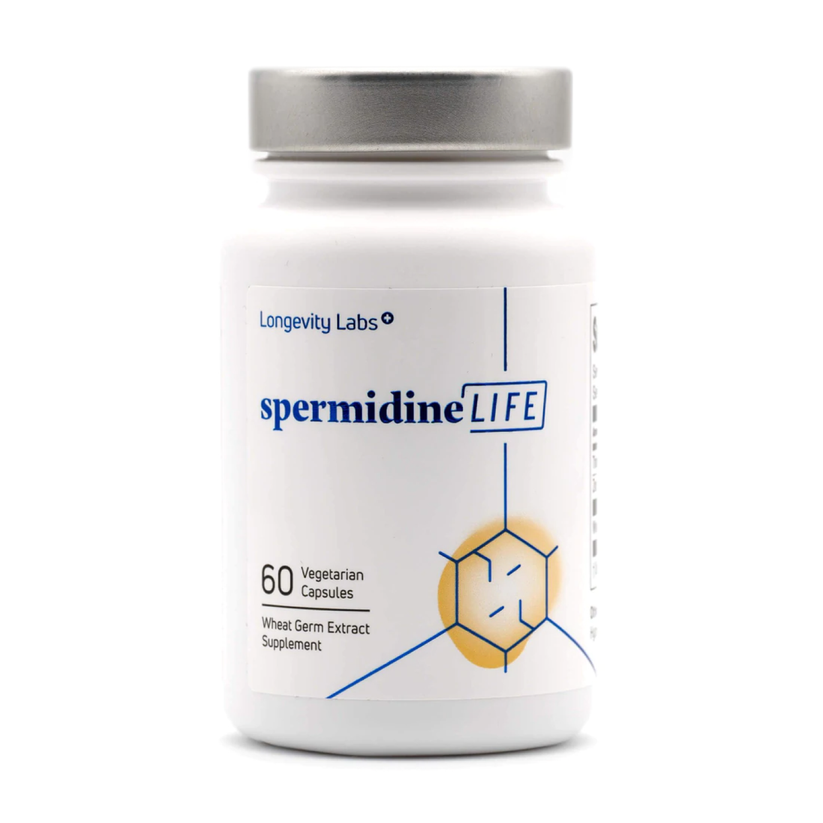
Product Review: The original commercial spermidine supplement, developed in cooperation with aging scientist Frank Madeo and the University of Graz — where most foundational spermidine research originated. Its CelVio Complex extraction method is proprietary and produced entirely in Austria. The honest caveat: batch testing verifies the 800mg extract dose, not the spermidine mg content directly. Buyers are purchasing research pedigree and manufacturing integrity.
Key Specs:
-
Form: 800mg CelVio wheat germ extract (2 capsules/day).
-
Dose: spermidine mg not independently stated; extract dose verified.
-
Added ingredients: zinc gluconate, thiamine hydrochloride.
-
Capsule coating: hypromellose, calcium carbonate, acetylated starch, magnesium stearate, glycerol.
-
Facility: proprietary facility, Graz, Austria.
-
Testing: every batch third-party tested to extract weight.
-
Gluten: 1.36mg per daily dose; vegan.
-
Price: ~$1.80–2.20/day.
Strengths:
-
Developed with Frank Madeo; University of Graz.
-
Longest commercial track record here.
-
Vegan; fully Austrian-produced.
-
Every batch third-party tested.
Weaknesses:
-
COA verifies extract weight, not spermidine mg.
-
Capsule coating includes magnesium stearate.
-
Most expensive per mg spermidine delivered.
3. Oxford Healthspan Primeadine Original — Score: 8.2/10
Product Review: Primeadine uses defatted Japanese wheat germ — defatting removes polyunsaturated fats that cause rancidity, improving shelf stability. Sourced and tested in Japan to ISO22000 food safety standards, it includes the full polyamine spectrum plus prebiotic FOS to support gut microbiome spermidine production. A genuinely differentiated whole-food approach, though it shares the 1mg/day dose limitation of SpermidineLIFE and carries the highest price-per-mg on this list.
Key Specs:
-
Form: defatted Japanese wheat germ extract.
-
Dose: 1mg spermidine per serving.
-
Added ingredients: prebiotic FOS, spermine, putrescine.
-
Facility: ISO22000-certified, FDA-registered, Japan.
-
Testing: every batch tested at JFRL.
-
Price: ~$2.50–3.00/day; 40mg gluten/serving.
Strengths:
-
ISO22000; highest food-safety standard here.
-
JFRL verifies actual spermidine mg.
-
Full polyamine spectrum; prebiotic FOS included.
Weaknesses:
-
1mg; same limitation as SpermidineLIFE.
-
Highest price-per-mg on this list.
-
40mg gluten; highest among wheat products.
4. GenuinePurity Liposomal Spermidine — Score: 7.6/10
Product Review: GenuinePurity leads with dose transparency and an industry-best return policy. Batch COAs are publicly accessible on the website without requiring a customer inquiry — a higher standard than most competitors maintain. The liposomal delivery claim is its weakest point: spermidine is water-soluble and cationic, making the case for liposomal encapsulation mechanistically thin.
Key Specs:
-
Form: wheat germ extract, liposomal encapsulation.
-
Dose: 8mg spermidine per serving.
-
Added ingredients: phospholipid delivery matrix.
-
Facility: cGMP-certified, US-manufactured.
-
Testing: third-party COAs publicly posted.
-
Price: ~$1.80–2.20/day; 97-day guarantee.
Strengths:
-
COAs publicly posted; no request needed.
-
8mg; competitive natural-source dose.
-
97-day guarantee; most generous here.
Weaknesses:
-
Liposomal claim; no pharmacokinetic support.
-
Not ISO 17025-accredited lab verified.
-
Disease-adjacent claims exceed current evidence.
5. Double Wood Spermidine — Score: 7.5/10
Product Review: Double Wood is the only wheat-free, gluten-free option on this list, using pure synthetic spermidine trihydrochloride (3HCl) at 99% purity. It is also the best value-per-mg by a significant margin. The trade-off is that synthetic 3HCl has far less human trial history than wheat germ-derived forms, and its "100x more potent than wheat germ" claim refers to concentration by weight only — not bioavailability or clinical effect.

Key Specs:
-
Form: spermidine trihydrochloride (3HCl), 99% purity.
-
Dose: 10mg spermidine per serving.
-
Added ingredients: none.
-
Facility: GMP-certified; third-party tested.
-
Testing: third-party COA available.
-
Price: ~$0.35–0.50/day; gluten-free.
Strengths:
-
Only gluten-free, wheat-free options here.
-
Best value-per-mg across all products.
-
Single ingredient; 99% purity verified.
Weaknesses:
-
3HCl; far less human trial history.
-
No co-occurring polyamines included.
-
"100x more potent" is misleading marketing.
6. Toniiq Spermidine+ — Score: 7.2/10
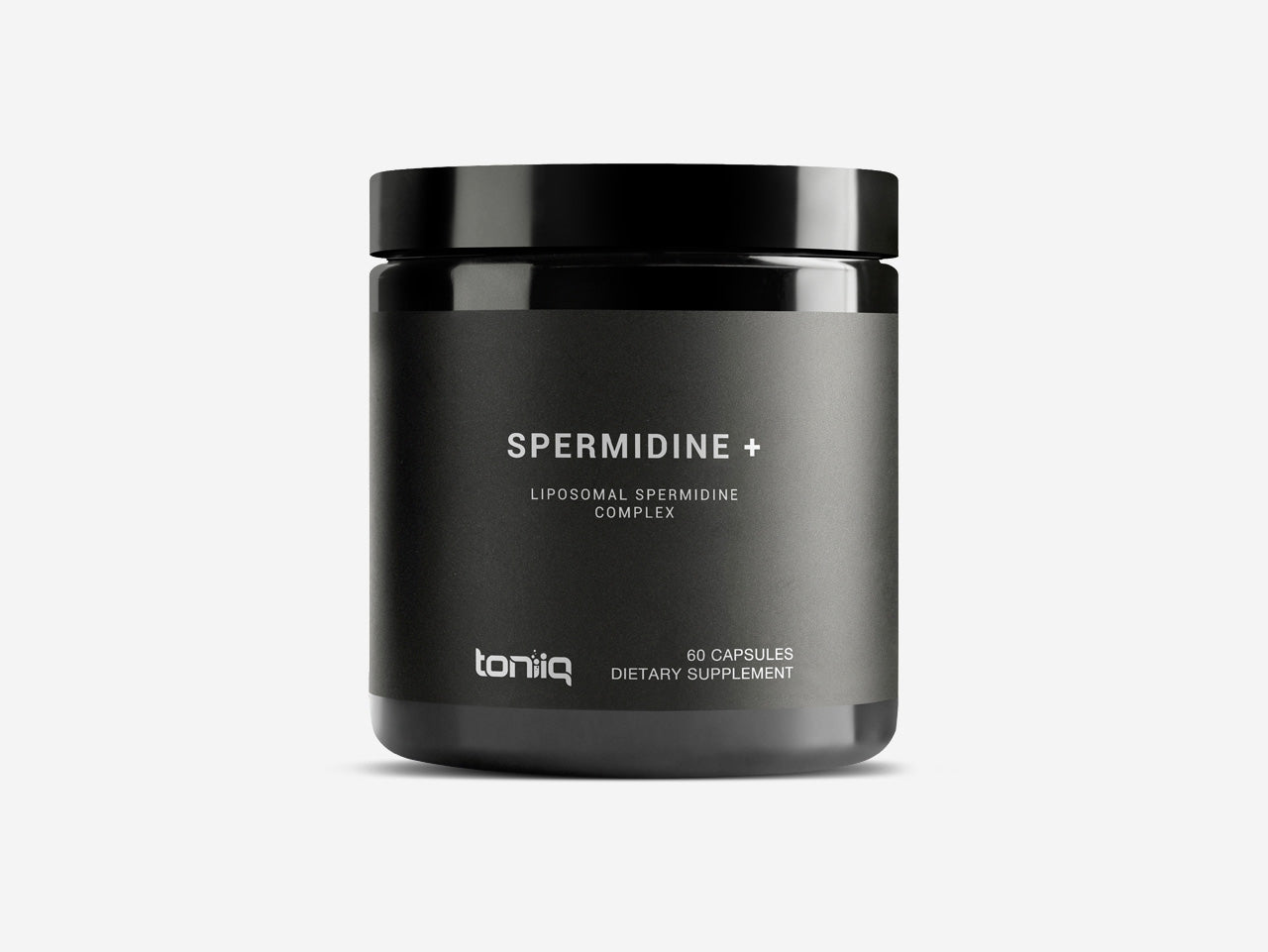
Product Review: Toniiq combines synthetic spermidine trihydrochloride with rice germ extract — avoiding wheat entirely while delivering 21mg, the highest capsule dose on this list. The rice germ source is a genuine differentiator providing co-occurring polyamines without gluten risk. COA accessibility is this product's main weakness: batch testing information is harder to locate and verify compared to most competitors here, which is a meaningful gap at this dose level.
Key Specs:
-
Form: spermidine 3HCl plus rice germ extract.
-
Dose: 21mg active spermidine per serving.
-
Added ingredients: rice germ extract.
-
Facility: GMP-certified, US-manufactured.
-
Testing: third-party; COA less accessible.
-
Price: ~$0.39–$0.42 per day; gluten-free.
Strengths:
-
21mg; highest capsule dose here.
-
Rice germ; co-occurring polyamines, no gluten.
-
Active mg clearly stated on the label.
Weaknesses:
-
COA is harder to locate and verify.
-
Hybrid formula; neither pure whole-food nor synthetic.
-
Exceeds EFSA 6mg food-derived threshold.
7. Neurogan Spermidine Gummies — Score: 6.4/10
Product Review: Neurogan is the only gummy-format product here, and format is both its appeal and its liability. At 25mg it claims the highest dose on the list, and third-party COAs are accessible. However, gummy matrices introduce genuine stability concerns — moisture and sugar accelerate active compound degradation, meaning stated dose at manufacture may not reflect dose at consumption. Recommended only for buyers who genuinely cannot take capsules and understand the trade-off.
Key Specs:
-
Form: natural spermidine source, gummy matrix.
-
Dose: 25mg spermidine per serving.
-
Added ingredients: pectin, sugar, natural flavors.
-
Facility: cGMP, US-manufactured.
-
Testing: third-party COA on product page.
-
Price: ~$0.65–0.80/day; vegan, gluten-free.
Strengths:
-
COA accessible on product page.
-
Gummy format; capsule-averse buyers.
-
Gluten-free, vegan, competitive price.
Weaknesses:
-
Gummy matrix; active compound degrades.
-
25mg exceeds EFSA safety threshold.
-
Format unsuitable where precise dosing matters.
Checklist: Questions to Ask Before Buying
- Does the label state the actual spermidine content in mg per serving (not just extract weight)?
- Is a lot-specific COA from an ISO 17025-accredited lab available?
- Does the COA specify the analytical method used (HPLC or LC-MS/MS preferred) for spermidine quantification?
- Is the form of spermidine specified — wheat germ extract or spermidine trihydrochloride?
- If wheat germ extract, is gluten content disclosed?
- Is the manufacturing facility GMP-certified?
- Does the company have a traceable connection to published research or named scientific advisors with relevant credentials?
- Are any additional ingredients in the formula disclosed at individual doses — no proprietary blends?
- Is there a minimum 30-day money-back guarantee?
- Does the company make only structure/function claims — and avoid illegal drug-like disease claims?
Absolute Deal-Breakers:
- Label shows only extract weight with no stated spermidine mg.
- No COA available or COA not lot-specific.
- COA does not distinguish spermidine from other polyamines.
- Claims to "clinically proven" effectiveness at a specific dose — no such dose has been established in humans.
- Proprietary blend with undisclosed individual amounts.
- No GMP certification.
Written by
Table of contents
- Criterion 1: Dose Per Serving
- Criterion 2: Source & Form of Spermidine
- Criterion 3: Third-Party Testing (COAs)
- Criterion 4: Additional Ingredients
- Criterion 5: Absorption & Bioavailability
- Criterion 6: Price Per Serving
- Criterion 7: Company Reputation
- Our Top Picks Based on These Criteria
- Checklist: Questions to Ask Before Buying


